

The Possum Mama Story (PMS) began as words spoken into women’s healing circles. She was the verbal that preceded the art, explored with Aboriginal women participating in yarning circles and spaces. These growing understandings forged the action of listening, a listening that goes deeper than conversation, sharing words as relational structures.
The voice above everything, the voice of women who have lived the Stolen Generations, who were stolen children, who are mothers living their children being stolen, and the Grandmothers who are fighting for their stolen Grandchildren. Displaced by genocide and in the ongoing trajectory of child protection practices, where Grandmother becomes a ‘legal guardian’ and is named as ‘carer’ in Care by Secretary Orders, diverting cultural authority away from the truth. “That’s white ways. These women are Grandmother, and Grandmother holds authority, in and of the child and the community that governs the child’s future” (BDPRBWMR, 2022). Grandmother narrative forms a shame lifting explanation of the intergenerational realities of the Stolen Generations and their descendants.
This takes place in Melbourne’s outer western suburbs, in Melton, on the intersecting lands of the Kulin Nations, where the topic of intergenerational removal of children is local to the researcher, and therefore personal; through experiences of foster care, where child protection’s projection of keeping kids in Culture is more often than not demonstrated by a small piece of New Zealand possum skin in the child’s file, as a remnant.
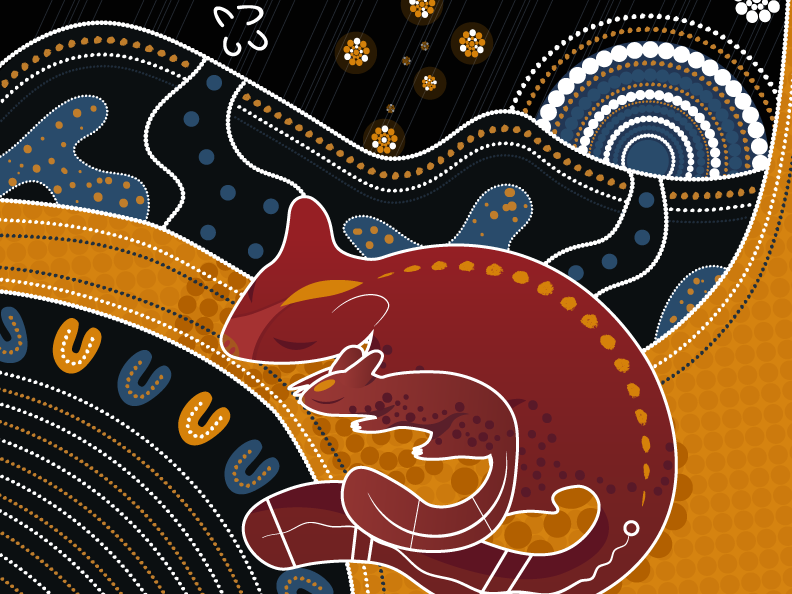
Mama and Baby (© McNally, 2021)
Watching as child protection targets families, sitting with grandmothers as they embodied distress and trauma in response to their stolen grandchildren, their history of removal sitting just under the surface of their pain; these inculcations and admonitions of the coloniser, (Guernsey, 2022), of child protection practices.
My heart moving into spaces of connection. A search for truth and moreover justice to mirror the stories I witnessed, set in fantasy, PMS moved from the verbal to the visual. Atkinson’s Trauma Trails travelling with me on this journey, exploring the removal of peoples from lands and the removal of children from parents and families, Kin, and culture, “impacting their ability to have healing relationships with country” (2002).
Building the story as I analysed the trauma, Possum Mama Story is written as a songspiral, as a method to meet the traumatic experiences that are inflicted through assimilation, all viewed through a lens where Aboriginal family and identity have been hunted and displaced, even destroyed. Possum Mama Story speaks to the realities of colonisation where physical, emotional, and soul wounds are created and continue (Brave Heart, 1998; 1999; 2000).
The quest now was how to convey PMS as a digital story without inflicting unnecessary pain on the injured. In women’s healing circles and trainings, PMS, delivered as a verbal meditation, aroused powerful emotions from those who carry unimaginable trauma. PMS activated discussion, deep sharing, grief storying, resilience, and moments of healing. Women’s voices validating her relevance as a moving reflection of trauma and resilience, where the wrenching away of children from mother and Grandmother, family and Kin dysregulates emotions, impacting relationships and sabotaging the development of nurture memory.
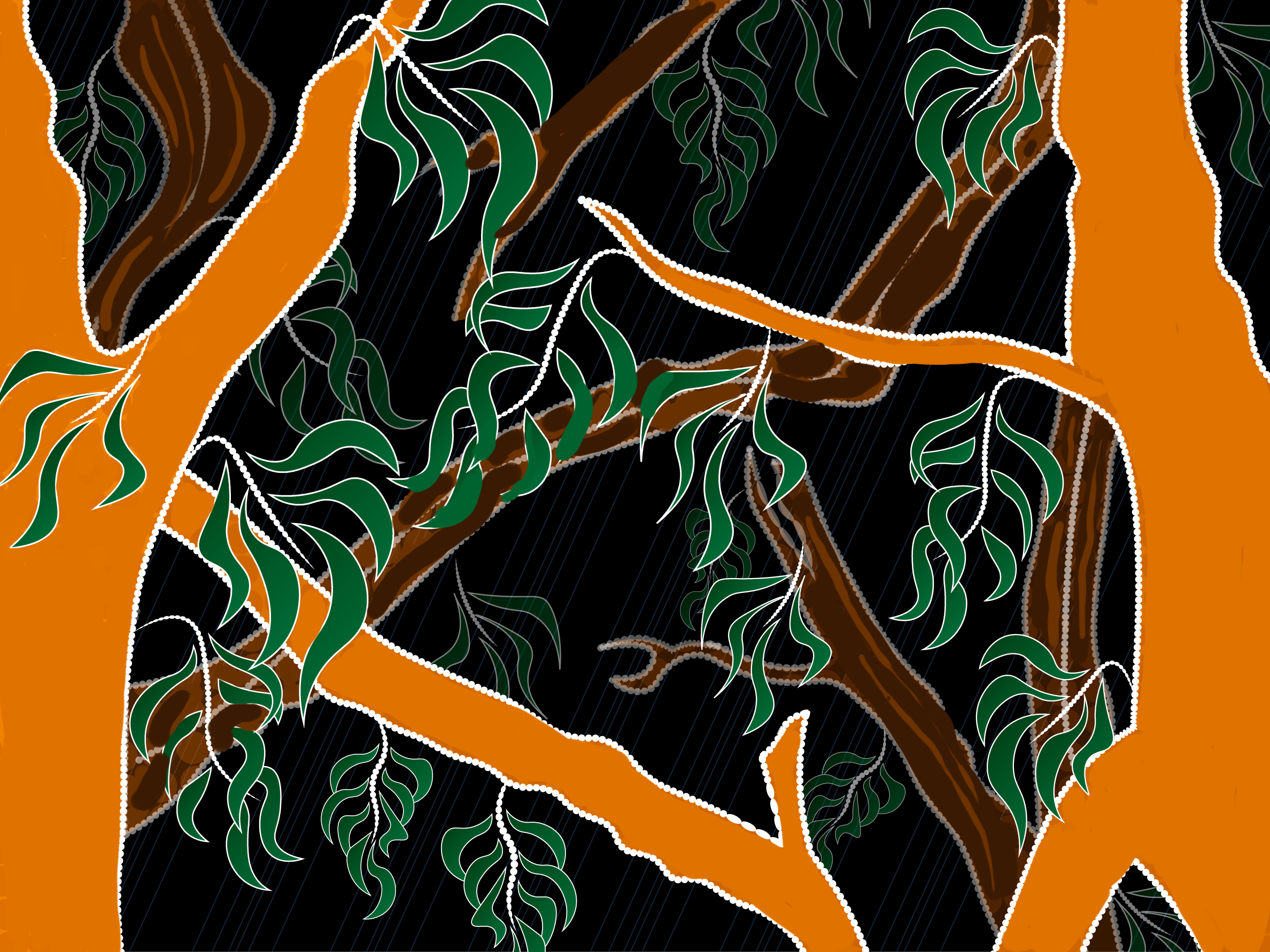
In the Bush (© McNally, 2021)
There were the grandmothers who were once the stolen children, the stolen child who is now mother/grandmother and the ocean of emotion and trauma that enveloped their connection to the story. The Possum Mama Story would need to depict history and the inhumanity of removal (assimilation) through a possum mama’s eyes. Her eyes softening the story, creating fantasy to distance the impact of the trauma, whilst still allowing the viewer to connect. Somehow reflecting white experiences of maternal love, as mothers, grandmothers, and daughters, to parallel the universal experience of mothering and nurture, all working to humanize white perceptions of Blak Matriarchy.
Demonstrating how nurture memory is disrupted through the removal of mother from child, and child from mother, robbing this generation and the generations that follow of the nurture memory that is their birthright. Palpable trauma lived as stalwart sobriety or self-medication in the face of a hurricane of pain perpetuated through child protection’s intergenerational assimilation manifesto. PMS is the collective voice, a shame-lifting explanation of the intergenerational realities of the Stolen Generations and their descendants.
Bloodlines guiding an understanding of the spirit between spaces, the spirit connecting spaces. This telling of maternal love is intended to create a challenge to political hegemony. Through a change in direction walking towards racism, humanising through images of the loved possum, whose skins envelops our bodies through birth, life, and death, whispering humanity in the ears of the oppressed and the compliant – to reach the victim of oppression whilst symbiotically reaching the servant of the oppressor who never fully understands the extent of oppression that is wrapped up in race-based projections of the so called ‘Aboriginal problem’.
The artwork was designed as a Songline. The Songline travel with Mama Possum as she journeys through trauma and loss towards healing and mother-wisdom, commencing where assimilation had forced her to be and then journeying to recovery guided by the Possum Mama Sistas (Aunties, Grandmothers).
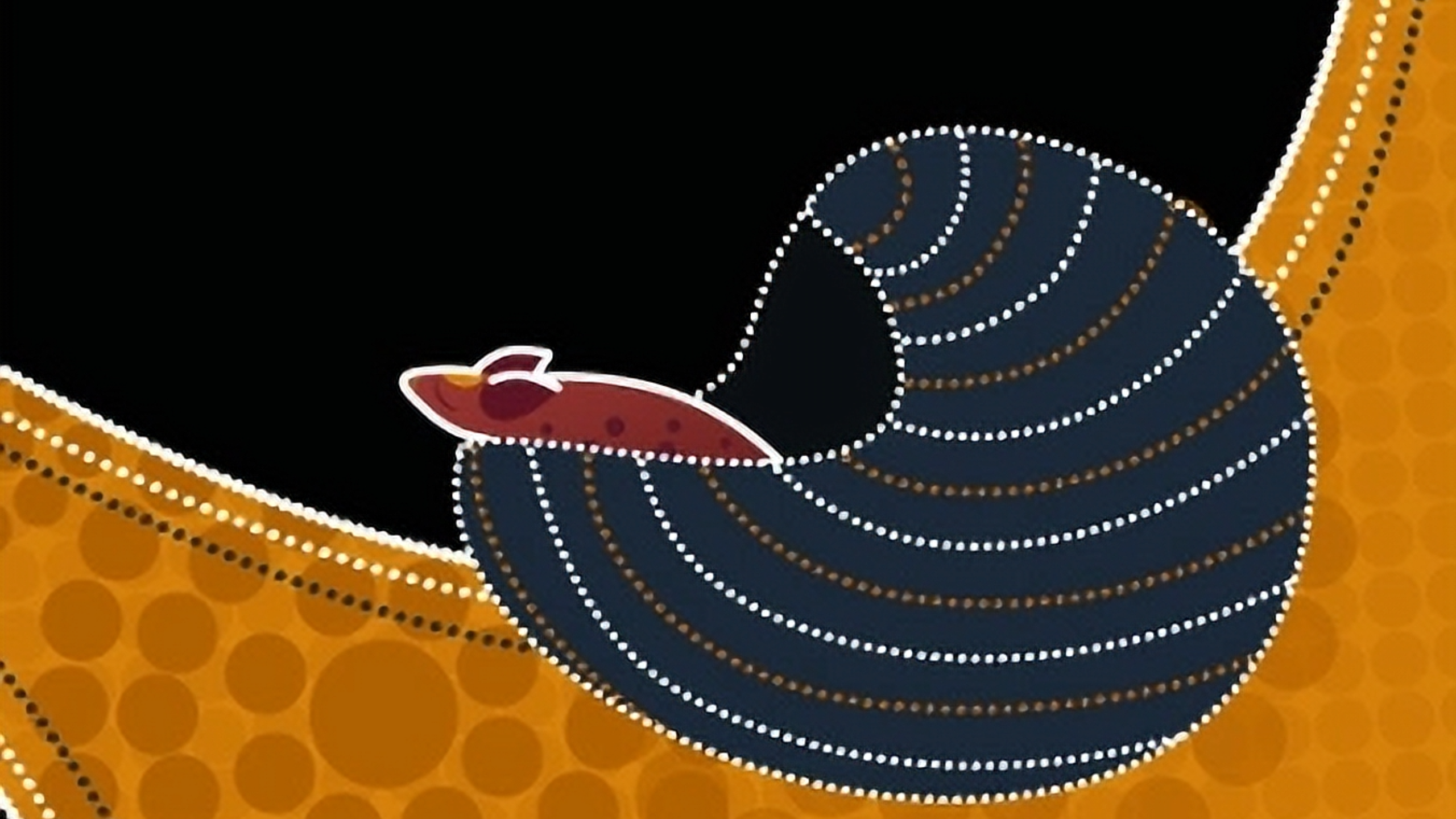
Digital Painting 1. Baby Mama Possum ‘a statement of loss’ (© McNally, 2020)
The Storyboard
The storyboard was created to reflect the messaging from the women of the integrative year of the study and was designed to form a safe space to revisit trauma and reclaim personal narratives whilst lifting shame and blame. Having every intention of shaping, even bending understandings to achieve insight. Less is more in the aestheticism of art that evokes the memory of personal nurture history, where the participant connects with their own experience of early years as they synergize with the humanity of the ‘other’ through visual and storying experiences that create a mechanism of disruptive transformative phenomenon (Pelowski & Akiba, 2011).
We meet Mama Possum as a baby and hear the story of her mother being taken by a dingo. She is cold and alone longing for her mother’s return. The dingo in the PMS is no villain, Dingo is just being dingo, a sacred animal in many cultures, for example: In the Dingo Dreaming of Beaudesert country men named Gwyala and Burrajum trained the dingoes Ningroongun and Barrajanda to help them hunt. They hunt a kangaroo rat and their shadow is seen by girls who tell their people who are camping close by. The men of their tribe chase the dogs, wanting the kangaroos they are chasing. The men end up fighting with the dogs which results in the dingoes dying. Their death caused a great flood that flattened the mountains and swallowed all the people of that tribe. Gwyala and Burrajim took the dogs and buried them under twin peaks east of Wollumbin (Mt Warning). Even today these twin peaks are known as Ningroongun and Barrajanda, or the Cougals. Story from artist Cynthia Farr Baruŋgam [1].
Hunting is Dingo’s nature making her a natural predator of possum. Dingos are more like modern dogs than wolves and sit somewhere between the grey wolf and the domesticated dogs of today [2]. The image of Dingo (as wolf) is used to depict the memory of Possum Mama’s death and is merged with the image of a wolf to distance Dingo from the true crime scene of assimilation - Dingo is a hunter of the Dreaming, with animal instincts. The digital picture portrays the silhouette of a wolf. The wolf is also a sacred animal in many other cultures. The wolf in Possum Mama story draws on a reference to the ravenous wolf disguised in sheep’s clothing, as a call out to religious institutions and the role they played in the Stolen Generations. Wolf disguised in sheep’s clothing, priest and nuns disguised in the cloth of the cross, representing a God of Love, originating in the Sermon on the Mount by Jesus recorded in the Christian New Testament: Beware of false prophets, which come to you in sheep's clothing, but inwardly they are ravening wolves (Gospel of Matthew 7:15).
The story depicts the tragedy of maternal loss as the sound of Dingo (wolf) howling is recorded with the picture of a full (Father) moon.
Digital Painting 2. Dingo (Wolf in Sheep’s Clothing) (© McNally, 2021)
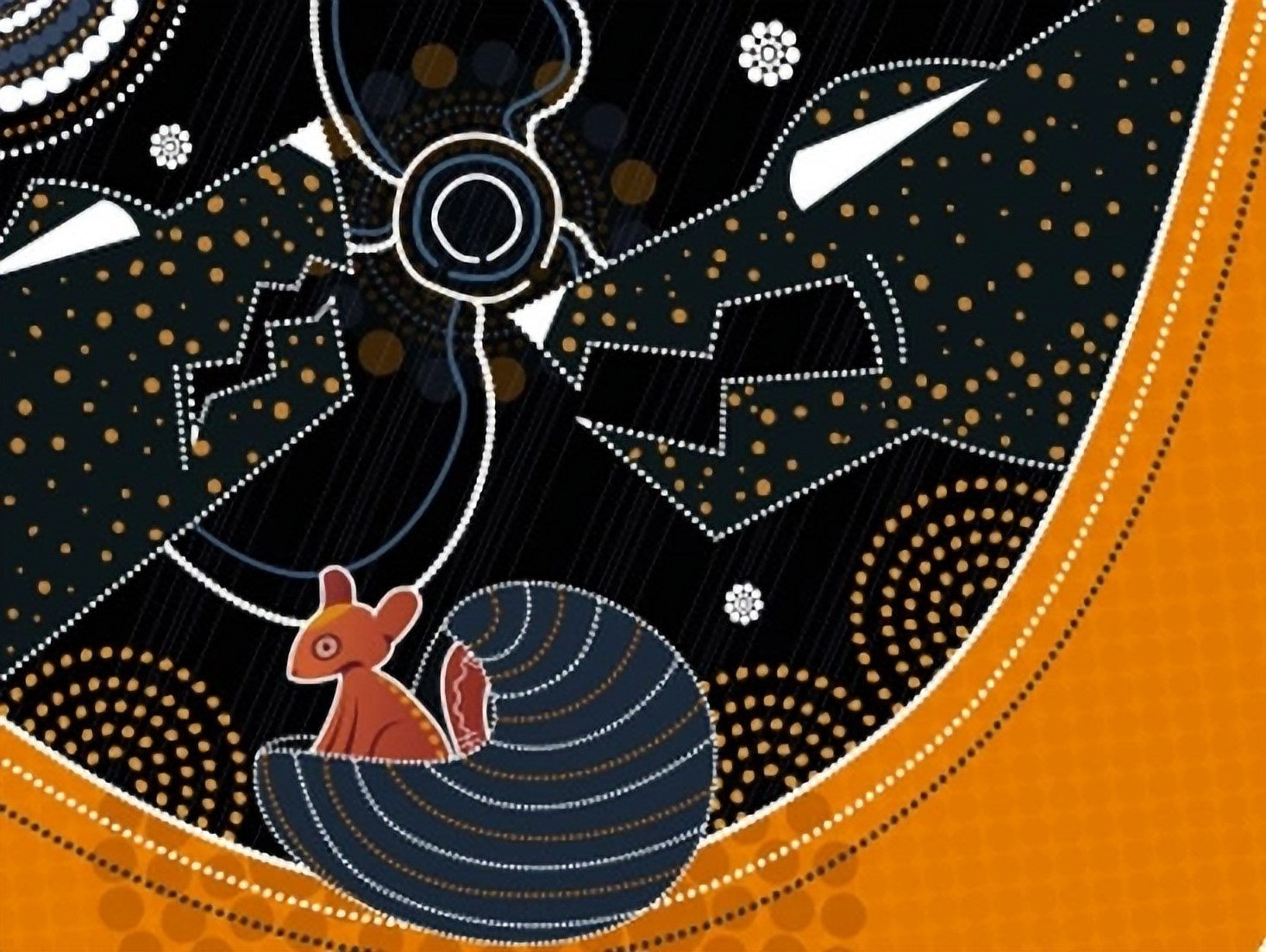
Digital Painting 3. Granny Aching with Sadness (© McNally 2021)
Granny Possum plays a role in the storytelling as the Grandmother who is aching with sadness from her children being stolen. The loss of Baby Possum’s mother sets in motion a chain of events that are still felt today, just as they are by the Stolen Generations. Possum Mama’s death devastates Granny Possum, she is consumed with sadness. Her grief is palpable, dissociation creates a distance between her and her grandbaby. Granny Possum stares into space with a look of loss and longing. Overpowered by her grief she is unable to meet the needs of her granddaughter.
When Baby Possum grows into a Mama Possum, the Possum Mama Sistas come for her as they remember her childhood. They understand Mama Possum needs to build nurture memory as this was taken away from her when her mother was stolen away.
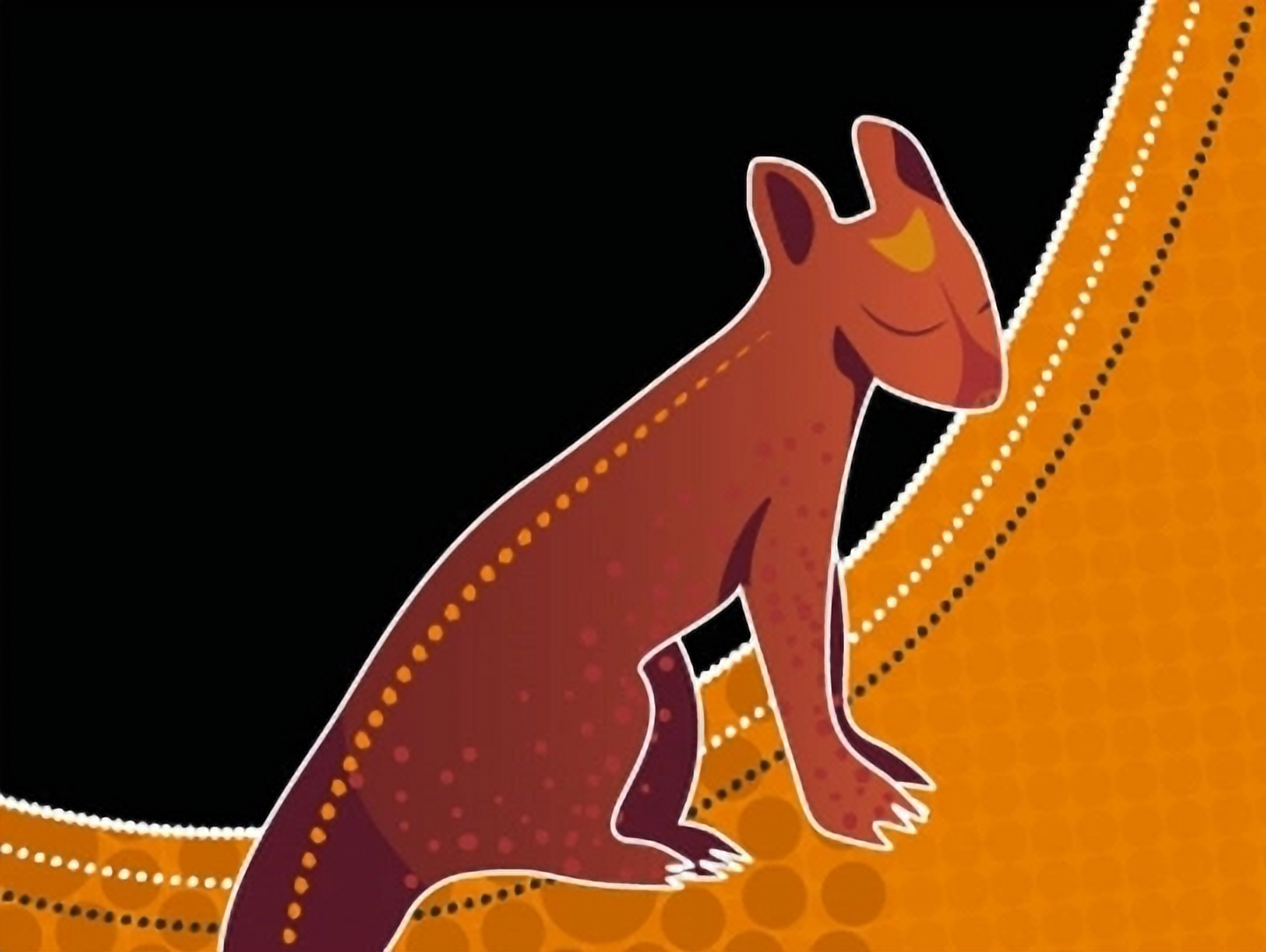
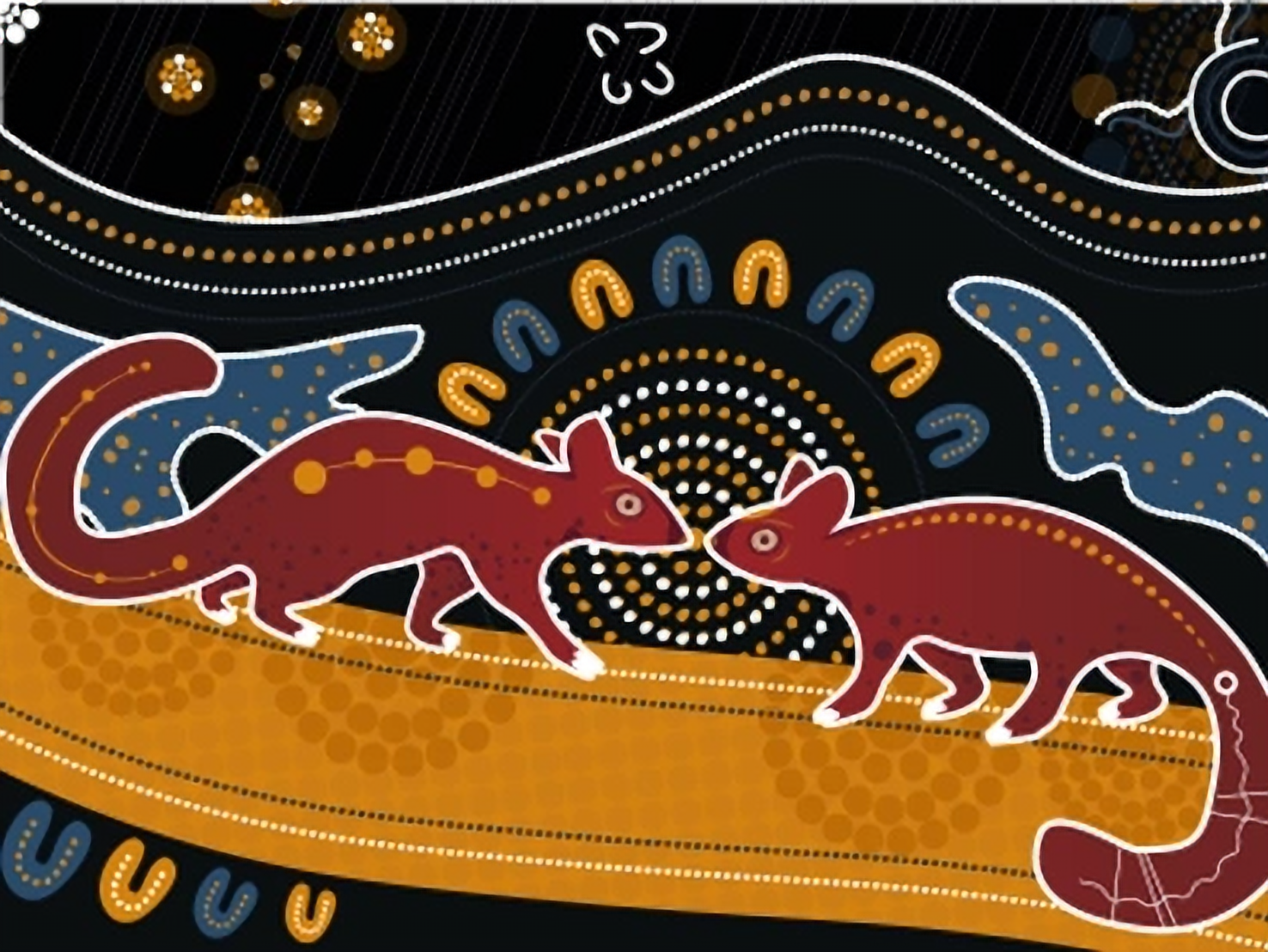
Digital Painting 4. Sistahood as Spirit (© McNally, 2021)
Dadirri (Deep Listening) is a major theme in the story, dealing with injury in the past by remaining present, remaining open to learning and spiritual knowing through interconnectivity; knowing when to come, when Sistahood is needed. Ungunmerr’s dadirri moves with the Mama Possum Sistas, Possum Mama, and her baby, Spirit calling us, walking with us at our pace. Breathing together, deep listening so as to connect (Ungunmerr 2010). The Possum Mama Sistas [Grandmothers/Aunties] know this rhythm, they move with the Spirit and facilitate healing as they turn up in the early days and months of Baby Possum’s life, changing the life course of Baby and Mama Possum; by protecting this generation, they protect the generations that follow.
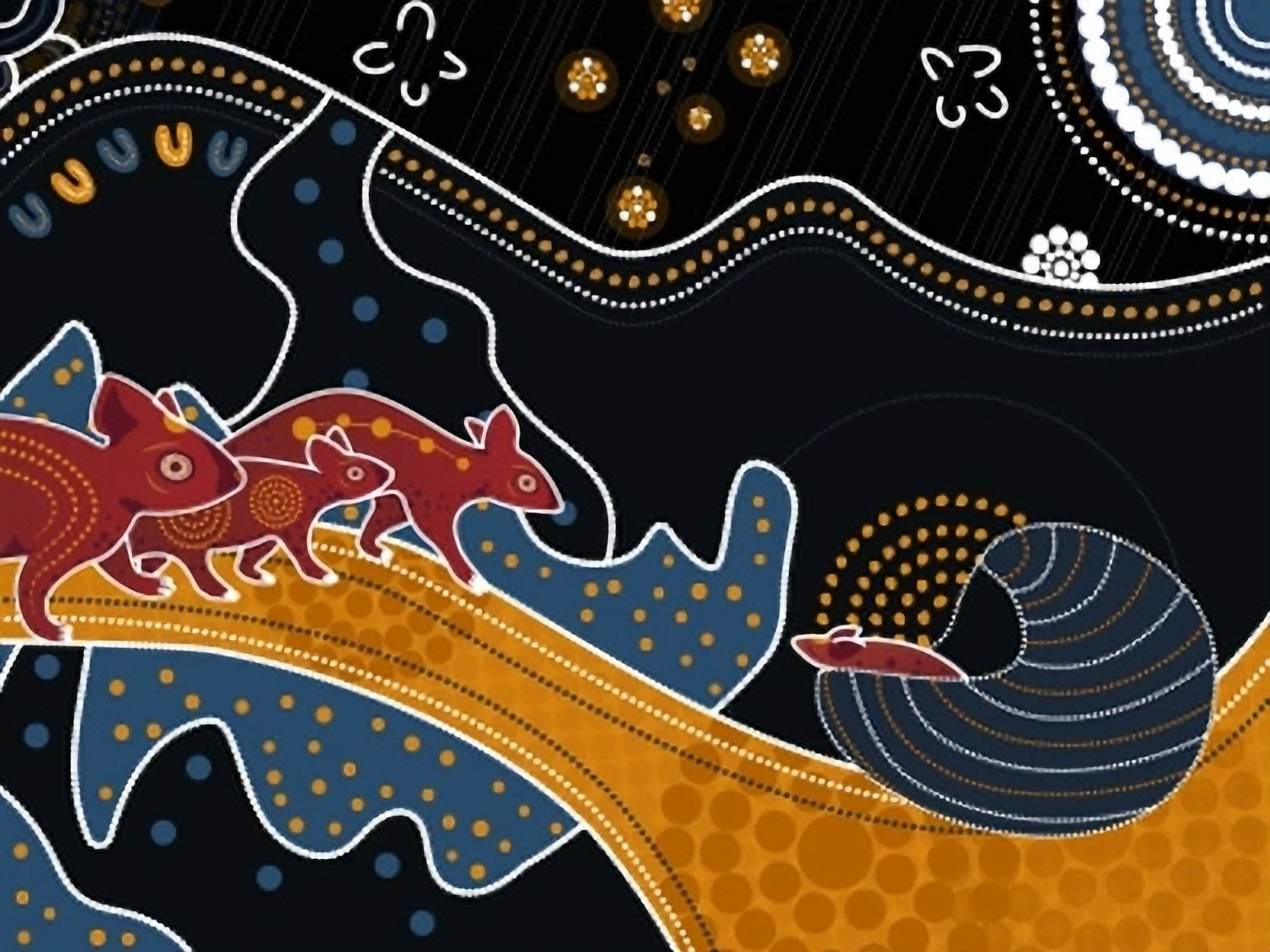
Digital Painting 5. Practical Solutions, our ways of knowing, being and doing (© McNally, 2021)
The intention of the PMS was not to trigger the trauma related to intergenerational removal and loss. The intention is to reach into wounded spaces to create opportunities to re-envision healing narratives. This motivation was coupled with an awareness that PMS held a small space in the universal story of maternal love and loss, the first 1000 days of a child’s life, the vital attachment and individuation stages of the child forming the basis of relationships to come (Bowlby, 1940; 1958; 1966; Bowlby & Ainsworth, 1956). The logic of Social and Emotional Wellbeing (Dudgeon & Walker, 2015), of Lifting the Blankets to expose the Transgenerational Effects of Indigenous Trauma (Atkinson, 2001), revealing trauma as the causation underpinning colonisation chaos, where chaos is delivered to the developing child who is estranged from family and shuffled around multiple foster homes in the action of genocide.
Possum Mama Story is set in fantasy to protect the viewer as it demonstrates ways of knowing being and doing (Moreton-Robinson 2004). The choice of possums to tell the story is the connection with possum skins. The PMS Sistas, Aunties, Nannies, come for Baby Possum and Mama Possum and bring balance to chaos, steadying intergenerational trauma with cultural and practical solutions.
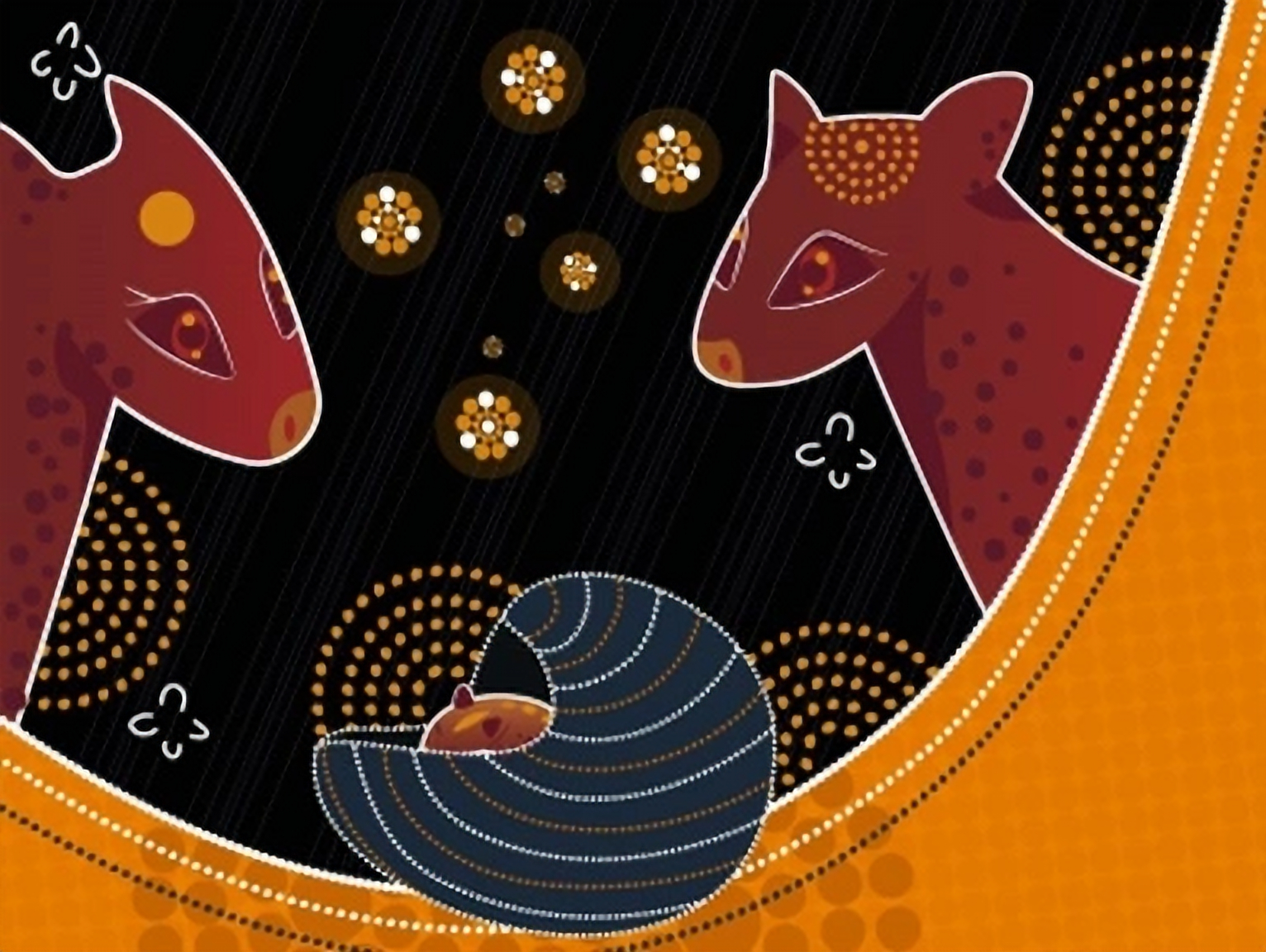
Digital Painting 6. Their eyes on her, their hearts with her (© McNally, 2021)
Possum Mama Story is a story of hope and love and the power of women’s ways of knowing being and doing as a practical remedy for attachment disruption. The digital paintings draw upon Aboriginal interconnectivity with animals and the land. PMS was designed to gently bring healing to centuries of suffering caused by assimilation. To ally non-Indigenous Australians, primarily women, with the plight for justice, as activism for Aboriginal mothering and Grand mothering rights and the rights of our children. Not to rescue, not to help, no white saviours needed here, but to protest, to complain and make noise, to challenge hegemony, where hegemony relies on white compliance for its survival.
Grandmother/Mother/Aunty/Sista’s eyes align empathy, bringing it inwards to develop insights, adjusting perceptions and positionality toward the Originals, adjusting perception and positionality toward the self as the once removed child.
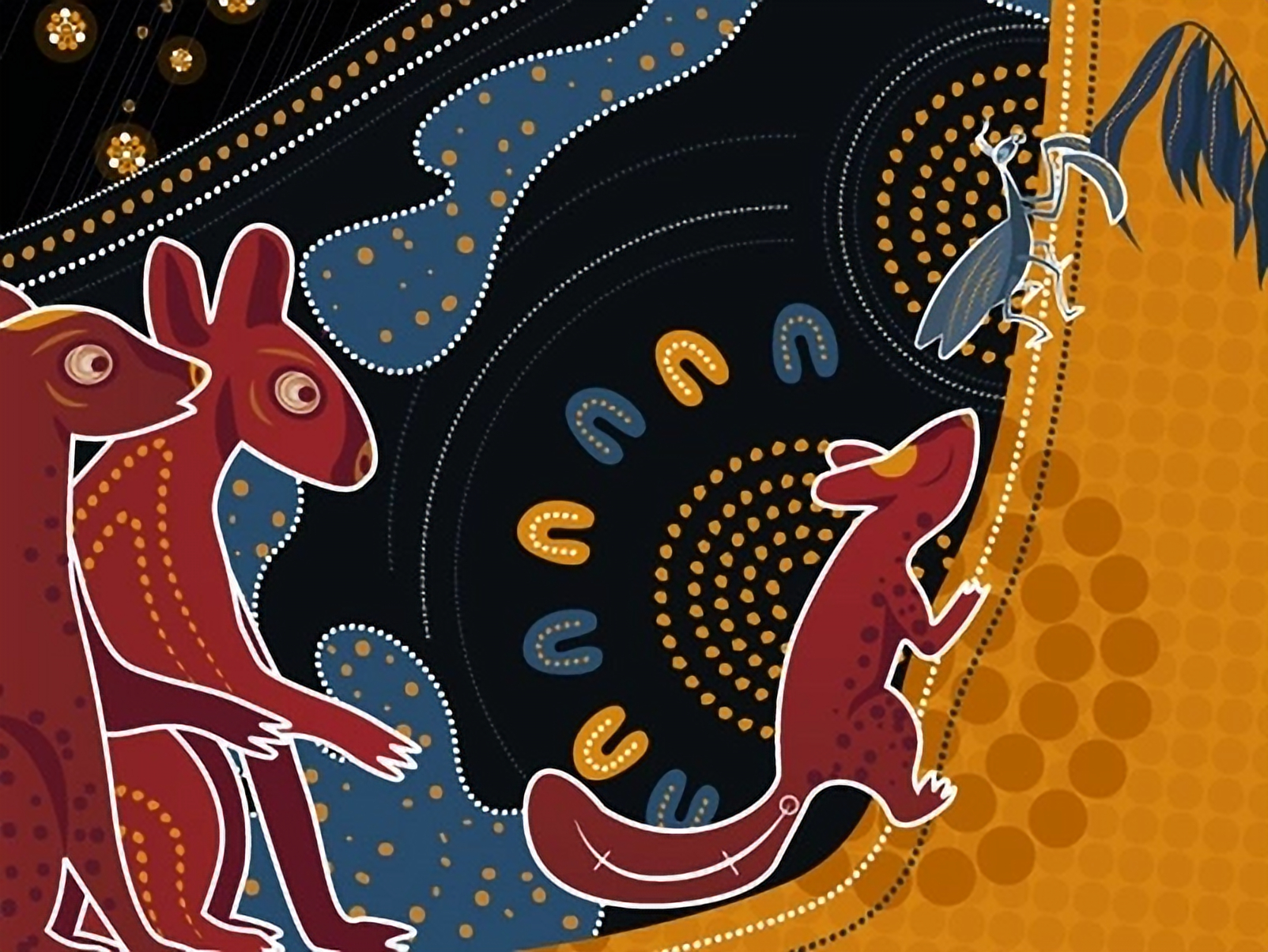
Digital Painting 7. Learning Mothering Skills (© McNally, 2021)
Challenging projections of the ‘Aboriginal problem’, the paternalized messaging that explains assimilation/colonisation chaos. Challenging the blaming explanation of dysfunction that requires government control to manage the ‘Aboriginal problem’, the ‘bedlam’; It is at this juncture that child protections stronghold on families works as an oxymoron, keeping the cycle of inter-generational removal travelling through the generations as it proclaims: ‘keeping kids in culture and safety’.
The irony of these contrived interventions is that they overlook historical and current trauma. Nurture is not rocket science and nurturing skills do not require qualifications or complex theories to actualise. Food and shelter are a basic human right as are the rights of the Indigenous child to know and be loved by family, Kin and community as they are immersed in a culture on country that links with their DNA (where possible). For nurture to bring balance to human need, love and connection must travel from one generation to the next in all its colourful, cultural, and eclectic manifestations. There is no perfection, all of us are a picture of fragmented nurture stories on a linear scale, without adversity resilience cannot be ignited.
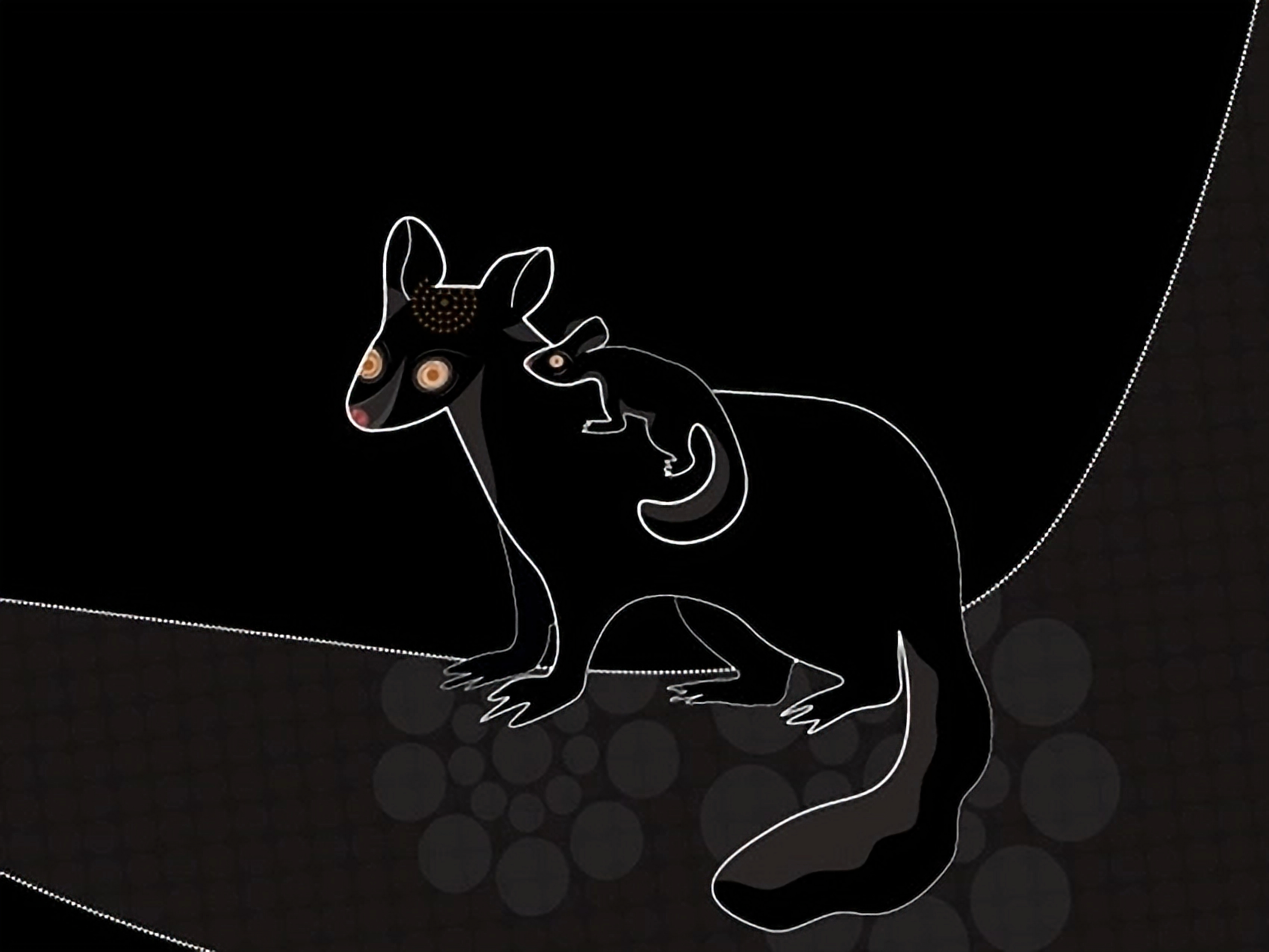
Digital Painting 8. Self Actualized Cultural Authority as Attachment Repair (© McNally, 2021)
Maslow’s Motivational Model is a concept of human motivational principles that explains thriving within a framework of individual outcome. In 1938, Abraham Maslow visited the Blackfoot (Siksika) Nation. There is pictorial evidence of Maslow’s visit there, which places him on the Blackfoot Reserve. The motivational model is really a story of how Blackfoot People’s influenced Maslow’s thinking [3] and how he stole Blackfoot psychological concepts. The legacy behind Maslow’s renowned model is "a story of systemic racism, Western epistemology (or ways of knowing), and the forced invisibility of Indigenous knowledges” (Bray 2019). Maslow’s stolen Motivation Model delivered profound effect on the fields of psychology, as well as the subfields of personality, developmental psychology, social psychology, psychopathology and organisation analysis.
Cultural and spiritual actualisation would become the foundation for the Boorai Dreaming Project as it progressed as an Indigenous model of self, community, and cultural transcendence (Bray, 2019). The Blackfoot Model becomes the roadmap which is storied as self-actualised cultural authority intertwined with community-actualised healing, where ancestral connection to country and to self facilitates cultural perpetuity or “the breath of life” (Barrows, 2023).
Possum Mama story asserts the need for a return to cultural knowledges, matriarchal authority and our ways of knowing, being and doing. In the story, Possum Mama gains mothering insights and nurture memory, which is integrated as informed relational motivation in her mothering practices. Symbolically reflecting Mother insights that are lived across the country by the Originals as they navigate the layers of oppression and injustice wielded by the Stolen Generations and the forced ongoing child removals. Courageous love is found in the hard-won mothering insights that build nurture memory, born, fought for and obtained beyond removal and incarceration, meeting the pain of the child self, the young woman self, and the mother self. Grandmother rites of passage in the hostile colonies reveals a love endurance unrivalled. Stolen, raped, tortured, her children stolen, raped and tortured, the violation of the psyche perpetrated through racist and oppressive government policies, and still Mother/Grandmother can love beyond limits. This is Grandmother, mother of my mother, Matriarch of me.
[1] Retrieved from: https://bluethumb.com.au/kunjawildlifeart/Artwork/gwyala-dingo-dreaming
[2] from: https://www.inverse.com/science/where-do-dingoes-come-from
[3] Abraham Harold Maslow was an American Psychologist who created Maslow's Heriarchy of Needs (1954).